If you run a small business, you’ve been told AI will change everything, that it’ll replace you — and also that it’s overhyped, or that it’s only for big companies with specialized tech teams. It’s hard to know what’s real.
What you have to go on is your own experience. You’ve probably used ChatGPT, Gemini, or Claude by now — to draft an email, rewrite a document, make sense of a form. It’s useful. But if you run a business, you’ve likely hit the same wall I did: it’s impressive in the chat window, and then you close the tab and go back to actually running the place. The line between “this thing is clever” and “this changes how my business runs” never quite gets crossed.
This guide is about crossing it — cutting through the noise to what AI can really do for a business like yours, and how to start putting it to work.
You don’t need a computer‑science degree to read or apply what follows. What you need is a clear picture of what AI can do for the specific business you run — the solo accountant or the thirty‑person firm, the dental practice, the construction company, the restaurant, the corner shop or the regional distributor, the community lender, or whatever it is you do. (If you’d like a plain‑English primer on what “AI” even is first, I wrote one here.)
From Chatbot to AI Agent: What’s Actually Changed
From a Chatbot You Ask, to an Agent That Works
The reason the classic ChatGPT‑in‑a‑window can feel like a parlor trick is that it’s AI in its first form — a chatbot. You ask, it answers. It can draft and explain, but it waits for you, one prompt at a time, and it doesn’t do anything past the chat box.
What’s underway now is the shift from that AI chatbot to an AI agent. I defined an agent back in 2023, before the phrase was on most people’s lips, as simply an AI entity that works on your behalf — and laid out the framework for how one actually operates. Three years later it’s real and in your hands: you give an agent a goal instead of a prompt, and it works across your files, your software, and your accounts to bring back finished work. For example, Anthropic describes its Claude “Cowork” agent in just those terms — “give it a goal and Claude works on your computer, local files, and applications to return a finished deliverable,” moving between apps and “completing tasks without the user coordinating each step.” That’s the difference that counts: not a smarter chat box — a coworker that does the work.
And it keeps improving — and the pace is picking up. METR, an independent lab, tracks the length of job an AI agent can finish on its own; as of early 2026 that length is doubling roughly every four months — faster than the seven‑month pace it set over the prior six years — with the strongest agents already taking on tasks that would run a person about five hours. Whatever an agent can’t quite do for your business today, the gap is closing fast.
What an AI Agent Actually Does Today
So what does an agent actually do for a business, right now? Quite a lot — here’s what’s on the table today.
They run long, multi‑step jobs on their own. The sharpest proof is in software, where two coding agents now run the whole job: Anthropic’s Claude Code — “an agent that reads your codebase, edits files, and runs commands” to “handle the entire workflow—reading issues, writing code, running tests, and submitting PRs,” fanning out across “10s to 100s of parallel subagents” and checking its own work — and OpenAI’s Codex, now on GPT-5.5, which OpenAI reports more than four million people use every week. Both run for hours at a stretch without being walked through each step. That same autonomy is now moving into ordinary back‑office work.
They work inside the everyday apps you already use. Microsoft’s Copilot now runs autonomous agents that “take action without waiting for a user prompt” — they “perceive events, make decisions, and execute tasks independently,” running routine workflows in the background across the business systems you already have.
They run errands for you on the open web. Perplexity’s Comet browser puts an agent right in your browser that handles multi‑step tasks on your behalf — booking, filling out forms, working through your inbox — navigating sites the way a person would.
They orchestrate whole teams of agents. At its May 2026 developer conference, Google showed Antigravity 2.0 running agents “in parallel,” spinning up “dynamic subagents,” and handling “scheduled tasks for background automation” — one person directing several agents at once.
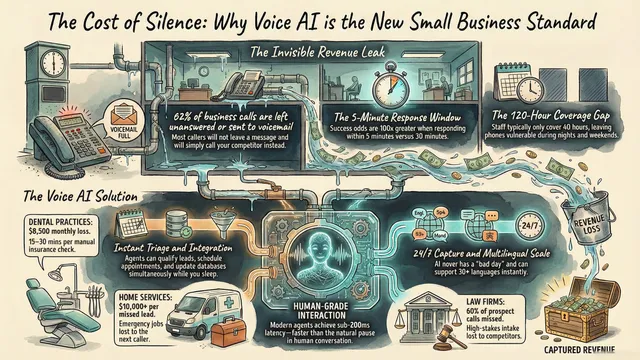
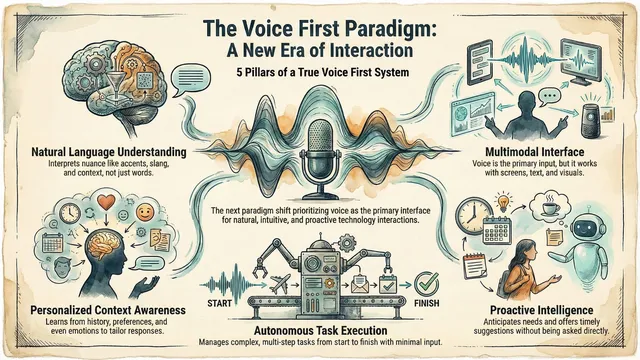
They answer the phone. Voice is its own version of this leap — from the robotic phone tree everyone hates to an AI agent that takes the order, answers the question, and books the appointment in a natural back‑and‑forth.
Notice the range. The simplest agents are barely more than a chatbot handed one tool — it can finally send the email it drafts. The most capable run for hours across your systems and bring back finished work. Both are “agents,” and the line between them keeps climbing: what sits at the experimental edge today is often routine within a year. The move isn’t to chase the frontier — it’s to put the capability that’s genuinely ready now to work, and let your business get stronger each time the technology takes its next step.
Real Gain or Gimmick: How to Tell the Difference
This is where most of the noise lives. An agent being able to do something is not the same as it doing that thing well enough to run your business on. A Gartner report in 2025 expects more than 40% of “agentic AI” projects to be canceled by the end of 2027 for unclear value, runaway cost, or weak controls — and figures only about 130 of the thousands of “AI agent” vendors are the real thing. There’s a name for the rest: agent washing.
Telling a genuine gain from a gimmick is the actual skill — and it’s the most useful thing you’ll take from this guide. What’s fine as a quick internal experiment, what’s solid enough to run your real operations, and what’s ready to put in front of a paying customer are three different bars, and knowing which is which is what separates real leverage from an expensive mess. It’s the difference between AI that impresses for a week and AI that builds enduring value. That takes rigor — the kind I’ve spent my career on, from Internet standards that carry your everyday phone calls to enterprise AI for 100M+ customers. It’s what turns AI from a gamble into a real advantage, at any size.
So here’s how the rest of this works, in three passes. First, what an AI agent does for your business whatever your industry — the jobs every business shares. Then, your specific industry: the real problem, what an agent does about it now, and the one thing to get right. And finally, how to actually start — a simple, step‑by‑step playbook you can put to work this week.
(In a hurry? The free three‑page guide is the condensed version of everything below — keep it or share it.)
What AI Can Do for Your Business, Whatever Your Industry
Before your industry’s specifics, start here — because the same core jobs have to get done in every business, whatever you sell and whatever your size. Whether you run the place single‑handed or with a team of forty, these are where an AI agent earns its keep first. (Call it an AI agent, an AI coworker, an AI employee — same idea: you hand it a job, it does the work, a person signs off.) This is already the common path, not a leap: the Federal Reserve’s latest survey found 46% of small employer firms now use AI, and the number‑one use, by a wide margin, is writing and marketing.
Getting and keeping customers. Reaching customers and growing sales is the most common challenge small employers name — and the lowest‑risk place to start. An AI agent produces the campaign end to end — the local ad, the website and social copy, the menu or service descriptions, the replies to reviews, several versions to test — all from your own facts and in your voice. You approve and publish; it does the heavy lifting.
Answering and following up — calls, messages, bookings. For any business whose customers call, text, or fill out a form, the phone and the inbox are a constant drain, and the lost revenue is the kind you never see: the caller who didn’t get through and dialed the next number instead. An AI agent can answer common questions around the clock, take and route messages, book and confirm appointments, send the reminders that cut no‑shows, and chase the quote or the lapsed customer you’d otherwise never get back to. (Handling it over the actual phone is its own discipline — I wrote a full guide to voice AI for that.)
The money — invoicing, books, and getting paid. Rising costs and uneven cash flow are perennial top challenges, and your financials are also what stand between you and a loan: 60% of small employers sought financing last year, and only 42% got the full amount. An AI agent keeps invoices going out and chased, categorizes the spending, and turns a messy month into a plain‑language picture of the cash — QuickBooks, for example, is shipping agents that do this in the background — and it organizes the very documents a lender or an SBDC counselor will ask to see.
The paperwork. The permits, renewals, licenses, SOPs, and grant or contract applications that never end — in New York City, a third of small businesses wait six months or more just to open, across as many as 15 agencies. An AI agent builds the checklist, the renewal calendar, the document inventory, and a plain‑language read of what an agency actually wants — the organizing layer, with you or your counselor confirming the rules.
Hiring and training. Finding good people is a perennial top‑five problem for small business (NFIB). An AI agent drafts the job post, the onboarding checklist, the training one‑pager, the shift‑coverage note. Drafting is the safe lane — the actual screening, ranking, and rejecting stays a human decision, and in places like New York City it’s regulated.
Stock, suppliers, and pricing. If you carry inventory, the margin leaks in a dozen small places — a supplier increase you didn’t catch, a slow seller tying up cash. Working from your point‑of‑sale or a clean spreadsheet, an AI agent can flag the margin changes, summarize a supplier’s price hikes, and show you which products or menu items actually make money. The catch is honest: this one is only as good as your data.
Serving customers in their language. Roughly one in five small employer firms is immigrant‑owned, and in a city like New York your customers speak dozens of languages. An AI agent turns out a strong first‑draft translation of your messages, signage, intake forms, and staff SOPs in minutes — with a person checking anything legal, medical, or binding before it goes out.
Across every one of these, the same rule holds: the AI does the work — sometimes even hours of it, end to end — but you stay the gate. Nothing consequential gets sent, posted, paid, or filed until a responsible human signs off. That isn’t a limitation — it’s the discipline that makes it safe, and it’s exactly what the data says to watch. Among small firms already using AI, the single biggest challenge they report is accuracy. Knowing what to delegate and what to check before it ships is the whole skill.
Find your industry. Let’s get specific.
AI for Your Specific Industry
Accountants, Lawyers, and Consultants
What eats your week isn’t the work you trained for — it’s everything stacked around it. The average lawyer bills only about 38% of an eight‑hour day; the rest goes to intake, document review, and chasing paper. Accountants feel it from the staffing side — firms now call hiring and keeping good people their single biggest challenge — and many of you run lean or solo, among the roughly four million solo, no‑employee professional firms the Census counts.
What’s changed is that an AI agent can now do that overflow work itself — pull the research, review the documents, draft the filing, prepare the return — and hand you finished work to check and sign off. This isn’t a promise about next year; it’s already mainstream — nearly 7 in 10 legal professionals now use generative AI for work, up from 27% two years earlier, and at the top of the profession it runs deep. Harvey’s AI agents “execute legal work end‑to‑end” and are used across more than 40% of the Am Law 100 firms; Thomson Reuters rebuilt CoCounsel on Anthropic’s Claude into a system that “plans, selects tools, retrieves authoritative content, and adapts mid‑workflow” the way a senior associate would, grounding every step in real law; on the tax side, AI now turns source documents and prior‑year returns into a 1040 “ready for professional review”, cutting a two‑day audit prep to five or six hours. Those enterprise platforms are the proof, not necessarily the price of entry — you don’t need one to start. Much of that same overflow work, a solo CPA or a three‑lawyer shop can start handing to a general‑purpose AI agent running on your own files — with your review and your client‑confidentiality rules built in.
One thing worth keeping in mind: you still own the output. The lawyers who cited cases their AI invented and got sanctioned are the reminder — the checking and the judgment stay yours. That’s not a limit on the AI; it’s what you’re paid for.
Builders, Contractors, and the Trades
Your hardest problem walks off the jobsite: there aren’t enough people. 92% of contractors say they can’t find enough qualified workers, and worker shortages are the leading cause of project delays — 45% of firms had a job slip to shortages last year, part of the 78% that saw a delay from any cause. When you’re that short‑handed, the worst place for your best people to spend an hour is hunting for an answer buried on page 240 of the specs.
This is where construction AI has gotten genuinely good, because it’s trained on your actual project documents instead of the open internet. Tools like Trunk Tools answer a field question across your plans, specs, RFIs, submittals, and contracts in seconds and link back to the exact page — turning a long document hunt into a glance, and handing hours a week back to a project manager. Procore ships job‑specific agents that draft RFIs and jobsite reports, and Togal.AI runs a takeoff straight off the drawings far faster than doing it by hand — so you can bid more work with the estimators you already have. None of it swings a hammer; it hands the hours back to the people who do. And winning the next job is moving the same way: bid marketplaces like PlanHub gather the open projects in one place, while AI proposal tools like Procurement Sciences surface the public solicitations that fit and draft a first, compliance‑checked response — so a small shop can chase more work without a full‑time bid writer.
Worth keeping in mind on any job: AI can assist, but you’d still want the licensed professional in responsible charge of anything sealed, permitted, or safety‑critical — the engineering ethics boards are explicit on that. On a site where a mistake shows up as injuries and liens, that line of accountability is the job itself.
Community Banks, Credit Unions, and Lenders
For a small institution, the cost of staying compliant behaves like rent — fixed, and heaviest on the ones least able to carry it. The smallest banks spend an estimated 11% to 15.5% of payroll on compliance, against 6% to 10% at the largest. Lending adds its own slog of manual document review — and the threat has turned synthetic: Deloitte projects that generative‑AI fraud — cloned voices, deepfakes, forged documents — could drive U.S. losses to $40 billion by 2027.
AI is now the tool on both sides of that ledger. On compliance, Anthropic ships financial‑services agent templates — including a KYC screener that “assembles entity files, reviews source documents, and packages escalations for compliance review,” with staff “firmly in the loop” — compressing an onboarding or AML review that once stretched across days. On lending, explainable‑AI models like those from Zest AI are built to approve more borrowers — including thin‑file applicants an older scorecard would have turned away — without raising default risk, and, this is the part that counts, to show exactly why each decision was made rather than act as a black box. That explainability isn’t a nicety; it’s the law.
The thing to watch with lending is the AI becoming a black box. If it’s helping decide who gets approved, you’d want to be able to explain those calls — so look for the kind that can show its reasoning, not just hand you a yes or no. There are rules around this worth knowing.
Restaurants and Food Service
You’re running one of the thinnest‑margin businesses there is — 42% of operators weren’t profitable last year, and more than nine in ten say food, labor, insurance, energy, and card fees are squeezing them. And the phone rings hardest at exactly the wrong moment — the dinner rush, when every hand is already on a plate and the reservation, the takeout order, and the catering question all roll to voicemail or to the next place on the list.
AI goes straight at the two things that bleed a restaurant: missed calls and invisible costs. On the phone, voice AI answers and takes orders without pulling anyone off the floor — systems like SoundHound’s restaurant voice run from drive‑thrus to full‑service phone lines, part of a voice‑AI shift that now handles routine calls at a fraction of the cost of a staffed line. A phone line like that, tuned to your menu and your POS, catches the orders that used to roll to voicemail. On the margins, the analytics now built into platforms like Toast let you ask, in plain English, which menu items and which shifts actually make money — the kind of visibility that decides whether a thin‑margin year ends in the black. One caution worth heeding: McDonald’s pulled its automated drive‑thru voice test in 2024 while affirming voice “will be part of our restaurants’ future” — so pilot it in your own kitchen noise before you lean on it.
It can draft the menu, the specials, the replies to reviews. Allergens are one place you’d want to keep a human, though — they’re safety‑critical, and a mistake there isn’t a typo, it’s a hospital call.
Retail and Wholesale
Your margin is under attack from several sides at once — shrink, returns, and the swipe fees that have become most retailers’ biggest cost after labor all eat the same few points, and it lands hardest on the smallest sellers. And the ground under the storefront is moving: customers are starting to shop through AI. An IBM–NRF study found 45% of consumers already use AI somewhere in their buying journey, and checkout is moving inside the assistant itself. If an AI can’t read your product data, it can’t recommend you — a brand‑new way to be invisible.
The opening is wide because retail has been slow to move: only about 14% of retail businesses use AI, below the all‑sector average. On the back end, Shopify’s Sidekick lets you ask “which SKUs will run out next week?” and hand back a reorder from your real sales, seasonality, and promo data — forecasting that trims both stockouts and dead inventory. On the front end, the same AI writes the product descriptions, the email campaigns, and the clean structured data that decides whether a shopping agent ever surfaces you. Being findable by AI is becoming a channel, not a novelty.
One thing to steer clear of: letting AI invent your social proof. Use it to reply to genuine reviews and write honest copy — faking them is exactly what regulators are now going after. Honest copy earns a brand; a fabricated five‑star wall earns a settlement.
Doctors, Dentists, and Clinics
The work that’s burning out your field isn’t medicine — it’s paperwork. Prior authorization alone eats about 13 hours of physician and staff time a week, and 94% of doctors say it fuels burnout; the 2026 MGMA burden report found nearly all practices calling the regulatory load unsustainable, with many hiring multiple admin staff per physician just to keep up. The charting that follows you home after the last patient is the part no one trained for.
One of healthcare’s most measurably proven AI wins is the ambient scribe. It listens to the visit, with the patient’s consent, and writes the clinical note — so you’re looking at the person instead of the screen, and not charting at midnight. The results are measured, not promised: Mass General Brigham reported physician burnout falling about 21% after adopting ambient documentation, and the leading scribes now plug straight into the major records systems. The same tools serve dental, behavioral, and veterinary practices, who chart just as much. And the front desk is moving the same way: AI receptionists answer the calls a busy practice misses, book and confirm visits, verify insurance, and run the recall campaigns that keep a schedule full — a category drawing serious capital, with Assort Health raising $120 million in 2026, at a $1.2 billion valuation, to field patient calls across 20‑plus specialties, and dental‑specific receptionists doing the same for practices. And diagnostic AI is established medicine, not science fiction — the FDA has authorized well over 1,400 AI‑enabled devices, including ones that flag suspected disease on an image for a clinician to confirm.
One thing you’d want to keep tight is patient privacy: before patient data goes near an AI tool, you’d want to be sure it stays protected and is used only the way it should be. (A signed Business Associate Agreement is one common way that’s handled.) With the clinician still on the hook for every signed note, AI turns into the thing that hands you back your evenings.
Salons, Repair Shops, Pet Care, and Local Services
In an appointment business, the phone is the business — and it rings while your hands are full: mid‑cut, under a hood, on the table. Every call that goes to voicemail is usually a booking that just dialed the next shop, and every no‑show is a slot you can’t sell twice. You can’t grow a one‑ or two‑chair operation by paying a full‑time receptionist to catch calls that come in bursts.
For a local appointment business, this is a clear, low‑risk first step: an AI receptionist that answers every call you can’t, around the clock, and books straight into your calendar — turning calls that used to hit voicemail into booked appointments, with automatic confirmations and waitlist fills that cut no‑shows for salons, repair shops, and groomers alike. And the booking itself is shifting toward AI: Fresha reports that in some markets a quarter of online bookings now come through assistants like Google’s Gemini — being bookable by an AI is starting to matter as much as being on the map.
If you’re going to have the AI reach out to customers — calls or texts — that’s worth checking on first; the consent rules vary from place to place, especially for outbound. Answering the calls that come in is one thing; having it dial out is where you’d look into it.
Trucking, Delivery, and Local Logistics
The margins are razor‑thin and the day is a grind of coordination — calling brokers for loads, fielding check‑calls, chasing paperwork, sitting in detention. Per‑mile operating costs minus fuel hit a record in 2024, so every hour a driver or dispatcher loses to the phone comes straight off the bottom line.
This is one of the fastest‑moving corners of AI, because the work is so phone‑and‑email heavy. AI agents now book loads, negotiate, run check‑calls, and collect documents end to end — HappyRobot, whose AI agents handle voice, email, and text across 70‑plus logistics customers including DHL, Ryder, and Werner, reports cutting the time to schedule a load from over a week to about 30 minutes. And it isn’t only for the giants: AI dispatch and load‑management tools are now within reach of a small fleet, not just the national carriers.
Another spot to be careful with is the record of a driver’s hours — a legal safety record there to keep drivers from being on the road too long. You’d want AI helping with the coordination around it, not quietly changing what it says.
Real Estate and Property Management
In real estate and property management, two things never wait: a lead and a leaky pipe. Whoever answers a new lead first usually wins it — but you’re at a showing, in a closing, or asleep when the next one comes in. And a small landlord’s week disappears into tenant questions, showings, screening, and chasing late rent, with delinquencies and insurance costs both climbing.
AI now carries the leasing conversation and the tenant inbox around the clock. AppFolio’s Realm‑X assistant reads lease documents, pulls renewal dates, and answers routine tenant questions 24/7, and leasing AI that responds the instant a lead comes in — and books the showing — is how you stop losing prospects to whoever answered first. Home search itself is moving into AI, too — Zillow has launched its app inside ChatGPT with its own AI mode — so as more buyers start their search by asking an AI, how your listings show up in those answers is a new front worth watching.
The thing you’d want to be careful with here is fair housing — anything that screens applicants or targets ads, you’d want to be sure it isn’t quietly discriminating. The rules are real, and one screening tool that downgraded voucher holders paid $2.2 million for it. It’s one to keep a close eye on.
Gyms, Studios, and Creative Services
If you sell memberships or classes, the whole business rests on people coming back — and most don’t. Industry‑wide, member retention averages only about two‑thirds a year — and the studios that fall below that bar usually lose people in the first months of a membership (per the Health & Fitness Association’s 2025 benchmarking report, the industry body’s first since 2019). Keeping a new member past those early months takes personal follow‑up — and that follow‑up is the first thing a busy front desk drops.
AI is good at exactly that follow‑up. Retention tools now sit on top of the booking system you already run — connecting to your scheduling software, flagging members who’ve stopped showing up, and reaching out to win them back. The smart move isn’t ripping out your software; it’s adding an intelligence layer that watches attendance and acts on it, so your staff stay on the floor with members. And the marketing every studio and creative lives on — the class promos, the social posts, the visuals — AI now turns out in‑house in minutes.
One thing worth knowing on the creative side: work that’s purely AI‑made isn’t really yours to protect — it’s your own direction and taste that makes it yours. (And cloning a real person’s voice or face without consent is its own thing to steer clear of — some states now make that explicit.) Used right, AI can help fill your classes and keep your staff on the floor with members.
How to Start Using AI in Your Own Business
You’ve seen what AI can do across your industry. The harder question is how to actually begin — and this is where most owners stall, because it sounds like an overhaul: new systems, a big rollout, everyone retrained at once. It’s the opposite. You begin small and specific, with one job. Here’s the playbook we walk owners through.
1. Decide to act. The first move isn’t a tool — it’s a decision. The quiet doubt that stops most owners is is this even for a business like mine?, and the SBA’s official research answers it: the number‑one reason small firms give for not adopting AI is believing it’s not relevant to a business like theirs, while the firms that skip productivity‑raising technology “will substantially lose market share to competitors that do.” It almost certainly is for you. So commit to beginning — the rest of this playbook is how.
2. Find the one job. Don’t adopt “AI” — adopt one agent, for one job. The best first job is the task you’d most love to never do again: repetitive, eats hours, takes little judgment, and isn’t a catastrophe if the first few tries come back rough. (Claire Vo, chief product officer at the software firm LaunchDarkly, calls keeping that list her “anti‑to‑do list” — “every time I do something I find annoying, I ask: how can I not have to do this again?”) Two quick tests for a good first pick: you already have what the agent needs — the inbox, the spreadsheet, the files — and you can tell at a glance whether it got the answer right. The missed calls, the follow‑ups, the books, the writing you keep putting off all qualify.
3. Put a capable agent on it — and connect it to your own information. A capable agent does more than answer a question — it takes on the actual task: drafts the campaign, works through the inbox, pulls the numbers together, and hands you something finished to check. What makes it your coworker rather than a generic chatbot is the connection — you point it at your own files, your inbox, and the tools you already run (your accounting, your calendar, your documents). Popular general‑purpose ones include Claude (with Cowork), ChatGPT (with Codex), and Google Gemini.
4. Keep yourself the gate. Run it inside your own walls first — as an experiment, with you checking the output — before it ever touches a customer. This is the discipline the whole guide rests on: the agent does the work, but a person signs off before anything is sent, posted, paid, or filed. It’s exactly what the SBA tells small businesses to do — “have another person review all AI products” — and it’s where your trade’s one rule lives: the allergen check, the fair‑housing screen, the licensed sign‑off from your industry’s section above.
5. Measure what it’s worth — saved and earned. After a few weeks, compare against the month before — in real hours and dollars, not a feeling. Count both sides: the time and cost it takes off your plate, and the money it brings in — the leads it answered, the quotes it followed up, the customers it kept. Keep the agent if it pays its way; if it doesn’t, drop it and try a different one. Measuring is also your defense against the hype. BCG, which advises the Fortune 500, puts numbers on it: in a successful AI effort only about 10% of the work is the algorithm and 20% is the technology and data — the other 70% is people and process. The tool is the easy part; the work is choosing the right job and building the habit of checking the output. A tool that never shows up in your numbers isn’t the one.
6. Earn trust, then hand it the next job. When one job is working, take on the next — one at a time, never ten at once; doing everything at once is how these efforts stall. Write down how your business uses AI as you go: a short, honest note is becoming an expected courtesy to customers. And revisit your list every month or quarter, because the capability keeps moving — the job that was too hard last season may be this season’s easy win. The owners who pull ahead won’t be the ones who bought the right tool once; they’ll be the ones who keep growing as the technology does.
That’s the whole playbook — decide to begin, find the one job, put a capable agent on it, stay the gate, measure, and expand. The safety spine is simple: review before anything ships, keep sensitive data out of public tools, and write down how you use it — the same discipline the federal NIST AI framework lays out for large enterprises, scaled to your shop.
The Bottom Line
AI has crossed a line — the chatbot you ask has become an agent that does the work. For a small business, that’s the shift that matters: a capable, general‑purpose agent now takes on the jobs every business shares — getting customers, answering the phone, the books, the paperwork, hiring — and the specific work of your trade, from drafting the campaign to fielding the calls to prepping the filing to catching the margin leak, and hands it back finished for you to approve.
You don’t begin with ten tools, a big project, or a technical background; you begin with one job. The one rule that never bends — a person reviews anything that matters before it goes out, alongside whatever your trade requires — is what keeps AI an advantage instead of a liability.
The capability is real, the way in is a single job, and the rules are knowable. None of it takes a technical background — if you can describe a task to a new hire, you can hand it to an agent. For most small businesses this has stopped being a someday question, and the owners who pull ahead are the ones who start.
Used well, AI doesn’t replace you — it amplifies you: the same business, with more reach, more hours back, new revenue you couldn’t chase before, and more room for the work only you can do. And it builds over time, not all at once: the right first job and the right agent, the guardrails to keep it safe, then measuring what works and improving as your business and the technology both evolve. That’s where Agenteer comes in. We sit with you, find the work worth handing off, build or connect the right agent, keep a human in the loop on the things that matter, and keep it sharp as your business learns. Talk to us about your business, and we’ll show you what’s possible.
Free download: AI for Small Business Guide by Agenteer (PDF) — the whole guide condensed to three pages you can keep or share.